Russians like to drink tea, and they have always liked it. According to a 2014 poll, 94% of Russians drink tea. As the famous writer Leo Tolstoy once said: "I need to drink a lot of tea, otherwise I can't work. Tea awakens the coveted opportunity."
Tea country
Unlike Napoleon or Hitler, tea successfully "invaded" Russia and conquered the country forever. Like most other countries, tea was originally imported from China, such as Chinese black tea, Chinese green tea, and oolong black tea. But when is it? Historians are still arguing about this. The 19th-century scholar Dmitry Prozorovsky wrote that in 1654 the Russian envoy to China called it "a common thing" and added, "Tea is modern One of the main necessities of the country.” This is of course a very Russian attitude.
"By the mid-19th century, all social classes, from the nobles to the poorest peasants, were drinking hot black tea," historian Alexey Volynets in "Russian Planet" Wrote in an article. Even the stern Russian Tsar Nicholas I between 1825 and 1855 ordered "tea" to serve imprisoned revolutionaries, because it would be inhumane not to do so.
In short, drinking tea has become a Russian tradition, bringing people from different backgrounds together. In 2016, Euromonitor International conducted research showing that 78% of Russians chose tea in the “tea or coffee” binary competition.
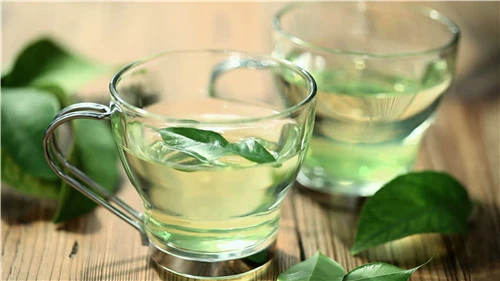
Everyone loves tea
No matter who the Russian is-saint or villain, genius or mediocrity-his chances of enjoying tea are huge.
Alexander I, who reigned from 1801 to 1825, produced affordable tea in restaurants and urban markets. The courtiers reported that he liked the drink so much that he always "started the day with green tea, cream and toast."
Vladimir Lenin, the creator of the October Revolution of 1917, was also a tea drinker. Many of the memoirs of revolutionaries of that period began with Lenin drinking black tea with his comrades in arms. Sovsekretno. Ru wrote: “During and after his exile, he drank beer or wine from time to time, but he was never a fanatic.”
Joseph Stalin, the most controversial ruler in Russian history, shares some common human characteristics, such as a love for tea. Marshal Alexander Vasilevsky recalled: "Usually at a meeting, his assistant brought him a cup of black tea with lemon. Stalin squeezed lemon in his tea, added some cognac, sipped the tea... …"
What's wrong with lemons?
In fact, Stalin was not the only one drinking his black tea and lemon, especially among Russians. In addition, in cold countries such as Russia, it is important to eat foods that contain vitamin C. However, not all Russians like lemon tea. Some people like the British way of drinking black tea and milk. But many people also drink white tea. Finally, there is no such thing as "bad tea" in Russia.